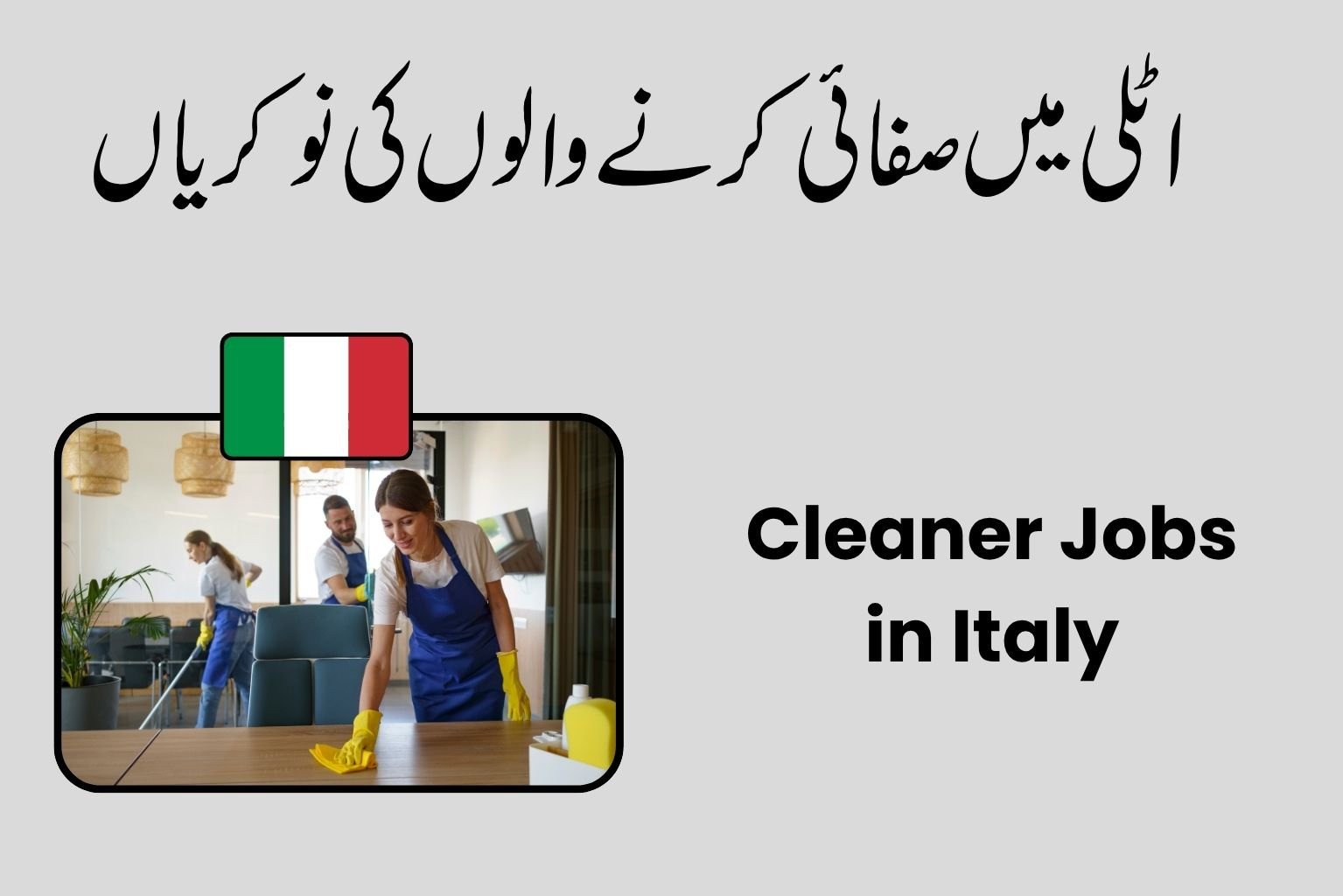
Cleaner jobs in Italy are an accessible employment option for people who want to build a career in cleaning, housekeeping, hospitality, facility management and property services. Hotels, restaurants, offices, hospitals, shopping centres, factories and private households all require cleaning staff, creating opportunities for both experienced workers and people entering the sector for the first time.
For international applicants, particularly those from outside the European Union, searches such as “cleaning jobs in Italy for foreigners,” “cleaner jobs in Italy with visa sponsorship,” and “Italy jobs with visa sponsorship” are increasingly relevant. However, applicants should understand that finding a vacancy and obtaining permission to work in Italy are two separate steps.
Italy’s 2026 immigration program authorizes 76,200 entries for non-seasonal subordinate employment, 650 for self-employment and 88,000 entries for seasonal subordinate employment. The applicable Decreto Flussi procedures are therefore important for eligible non-EU workers looking for employer-sponsored opportunities.
This guide explains cleaner jobs in Italy in detail, including salary expectations, types of positions, eligibility, skills, documents, Italy work visa requirements, visa sponsorship and the application process.
Why Cleaner Jobs in Italy Are a Good Opportunity
Cleaning work is essential across Italy’s tourism, healthcare, commercial and residential sectors. Unlike many professional occupations, most general cleaning positions do not require a university degree.
Some vacancies may require previous experience, but employers often place greater emphasis on reliability, punctuality, physical ability and attention to detail.
Main advantages include:
- Entry-level opportunities are available
- A university degree is usually not required
- Jobs exist in hotels, offices, factories and private residences
- Both full-time and part-time positions can be available
- Experienced cleaners can move into supervisory roles
- Hospitality experience can lead to housekeeping careers
- Opportunities may exist in major tourist cities
- Some employers may recruit non-EU workers through legal immigration procedures
- Cleaning experience can be useful when applying for facility-service positions
For international candidates, the most valuable opportunities are vacancies that clearly state that the employer can legally employ foreign workers or participate in the relevant immigration process.
Types of Cleaner Jobs in Italy
The word “cleaner” covers a wide range of occupations. Your salary, responsibilities and working hours can change depending on the employer and applicable collective agreement.
| Job Position | Estimated Monthly Gross Salary | Typical Responsibilities |
|---|---|---|
| Hotel Cleaner | €1,100–€1,600 | Guest rooms, bathrooms and common areas |
| Room Attendant | €1,100–€1,600 | Hotel room cleaning and preparation |
| Housekeeper | €1,100–€1,700 | Residential or hospitality cleaning |
| Office Cleaner | €1,000–€1,500 | Offices, meeting rooms and common areas |
| Industrial Cleaner | €1,200–€1,700 | Factories, equipment and industrial areas |
| Hospital Cleaner | €1,150–€1,700 | Healthcare cleaning and sanitization |
| Restaurant Cleaner | €1,000–€1,500 | Kitchens, dining rooms and service areas |
| Shopping Centre Cleaner | €1,000–€1,500 | Retail and public areas |
| Domestic Cleaner | €1,000–€1,600 | Private homes and household cleaning |
| Facility Services Worker | €1,200–€1,800+ | Cleaning and general facility services |
| Housekeeping Supervisor | €1,400–€2,000+ | Managing cleaning teams and schedules |
Important: Salary figures are indicative estimates rather than guaranteed wages. Actual earnings depend on the employment contract, collective agreement, location, hours, experience, overtime and allowances.
Italy’s Ministry of Labour publishes official labour-cost information for businesses operating in cleaning, disinfection and integrated/multiservice services, including updated 2026 tables.
Cleaner Salary in Italy 2026
One of the most common searches by overseas applicants is “cleaner salary in Italy per month.”
A general cleaner may earn around €1,000–€1,500 gross per month, while workers with more responsibility, experience or specialized duties can potentially earn more.
Hotel cleaners may have additional opportunities during busy tourism periods, particularly in major tourist destinations. Industrial and specialized cleaning positions can also offer different rates because of the nature of the work and required procedures.
Factors affecting cleaner salary in Italy include:
- Number of working hours
- Full-time or part-time status
- City and region
- Previous experience
- Type of cleaning
- Employer
- Collective labour agreement
- Overtime
- Night or weekend shifts
- Additional responsibilities
Applicants should always ask whether an advertised salary is gross or net. Gross salary is before taxes and social contributions, while net salary is the amount received after applicable deductions.
Cleaner Jobs in Italy for Foreigners
Foreign applicants can search for cleaning vacancies through Italian employment websites, company career pages and public employment services.
Useful search phrases include:
- Cleaner jobs in Italy for foreigners
- Cleaning jobs in Italy
- Hotel cleaner jobs in Italy
- Housekeeping jobs in Italy
- Cleaning jobs in Italy with visa sponsorship
- Italy jobs with visa sponsorship
- Jobs in Italy for non-EU workers
- Employer-sponsored jobs in Italy
- Italy work permit sponsorship jobs
- Entry-level jobs in Italy for foreigners
Learning basic Italian can significantly improve your chances. Many cleaning jobs involve communication with supervisors, hotel guests, customers or other workers.
Useful Italian job terms include:
- Addetto/a alle pulizie – cleaning worker
- Addetto/a alle pulizie industriali – industrial cleaning worker
- Cameriere/a ai piani – hotel room attendant
- Governante – housekeeping supervisor/manager
- Colf – domestic worker
- Impresa di pulizie – cleaning company
Cleaning Jobs in Italy With Visa Sponsorship
This is one of the most important areas for non-EU applicants.
A vacancy described as “visa sponsorship” should not be interpreted as an automatic guarantee of an Italian work visa. For a non-EU worker living abroad, the employer generally has to initiate the legal employment authorization process.
Italy’s Ministry of Foreign Affairs explains that non-EU nationals entering Italy for subordinate employment generally enter under the applicable immigration quota system, and the Italian employer must first request a Nulla Osta al lavoro from the Sportello Unico per l’Immigrazione.
Therefore, applicants should be cautious about websites or agents promising a guaranteed “Italy work visa sponsorship” in exchange for large upfront payments.
Italy Work Visa Requirements for Cleaner Jobs
For a non-EU applicant, the process normally begins with an Italian employer.
The general process is:
Job offer → Employer authorization → Nulla Osta → Visa application → Entry into Italy → Residence permit
The exact requirements can vary according to nationality, employment category and the Italian consular office handling the application.
For subordinate employment, the Italian authorities generally require the employer to obtain the necessary work authorization before the worker applies for the employment visa.
Common documents may include:
- Valid passport
- Completed visa application form
- Recent passport-size photographs
- Employment documentation
- Nulla Osta/work authorization
- Employment contract or related documentation
- Evidence of relevant experience where requested
- Proof of accommodation or other supporting documents where applicable
- Additional documents requested by the Italian consulate
The exact document checklist should always be confirmed with the Italian embassy or consulate responsible for your place of legal residence.
Eligibility Criteria for Cleaner Jobs in Italy
General cleaning jobs usually have straightforward requirements.
Typical requirements include:
- Minimum legal working age
- Valid passport
- Ability to legally work in Italy
- Physical ability to perform cleaning duties
- Reliability and punctuality
- Basic understanding of workplace safety
- Ability to follow instructions
- Willingness to work flexible schedules
- Previous cleaning experience for experienced positions
Some employers may also request:
- Previous hotel experience
- Industrial cleaning experience
- Knowledge of cleaning chemicals
- Experience operating cleaning equipment
- Basic Italian language skills
- References from previous employers
A formal university qualification is generally not necessary for ordinary cleaning positions.
Skills Employers Look For
Although cleaner jobs are often entry-level, good practical skills can make an applicant more competitive.
Important skills include:
Attention to detail: Cleaning standards are particularly important in hotels, healthcare facilities and offices.
Time management: Cleaners often have to complete several rooms or areas within a fixed schedule.
Physical stamina: The work can involve standing, bending, lifting and repetitive movements.
Safety awareness: Workers need to understand how to handle cleaning products and equipment correctly.
Teamwork: Hotel and commercial cleaning operations often involve teams.
Reliability: Employers need workers who consistently arrive on time and complete assigned duties.
Basic Italian: Even elementary Italian can make communication with supervisors and colleagues easier.
Documents to Prepare Before Applying
International applicants should prepare their documents before beginning a serious job search.
Recommended documents include:
- Updated CV
- Valid passport
- Passport-size photograph
- Employment certificates
- Previous employer references
- Training certificates, if available
- Cleaning or hospitality certificates
- Language certificates, if applicable
- Police or background documents if requested
- Copies of previous work permits, if applicable
Keep digital copies in PDF format because many online applications require electronic documents.
How to Apply for Cleaner Jobs in Italy: Step-by-Step
Step 1: Prepare an Italian-Style CV
Create a clear CV containing:
- Full name
- Contact information
- Work experience
- Cleaning responsibilities
- Education
- Skills
- Languages
- Availability
- References
If possible, prepare an Italian version of your CV.
Step 2: Search Reliable Job Portals
Search using both English and Italian keywords.
Useful websites include:
- EURES – European Job Mobility Portal
- Cliclavoro – Italian Ministry of Labour employment portal
- Indeed Italy
- LinkedIn Jobs
Search terms such as “addetto alle pulizie,” “cameriere ai piani,” “housekeeping,” and “pulizie industriali” can produce more relevant Italian vacancies.
Step 3: Research the Employer
Before sending documents, check:
- Company name
- Official website
- Physical location
- Job description
- Employment contract
- Salary information
- Contact details
- Whether the employer is actually hiring
Avoid employers who demand unexplained recruitment fees or promise guaranteed visas.
Step 4: Submit Your Application
Follow the employer’s instructions carefully.
A short application message can mention:
- Your cleaning experience
- Your availability
- Your nationality/residence
- Your language skills
- Your interest in relocation
- Your willingness to complete the legal immigration process
Step 5: Attend the Interview
Interviews may be conducted by phone, video call or in person.
Prepare to answer questions about:
- Previous cleaning experience
- Types of facilities you have cleaned
- Cleaning chemicals and equipment
- Working hours
- Weekend availability
- Physical requirements
- Language skills
- Relocation plans
Step 6: Employer Starts the Work Authorization Process
For a worker outside the EU, the employer generally needs to request the necessary Nulla Osta through the Italian immigration system when the applicable rules and quotas require it.
Do not purchase a supposed work permit from an agent. The authorization is part of the official immigration process.
Step 7: Apply for the Italian Employment Visa
After receiving the required authorization, the applicant can proceed with the appropriate Italian employment visa application through the responsible Italian diplomatic or consular authority.
Italy’s official visa information explains the procedures and visa categories for employment.
Step 8: Travel to Italy and Complete Residence Procedures
After entering Italy for employment, additional residence and immigration formalities must be completed. Official Italian visa guidance explains that foreign workers must complete the relevant residence-permit process after entry.
Best Italian Cities and Regions for Cleaning Jobs
Cleaning work can be found throughout Italy, but tourism and business activity can influence demand.
Potential locations to investigate include:
Rome
Hotels, offices, restaurants, tourist properties and commercial buildings create a large service sector.
Milan
Milan has strong demand across offices, commercial buildings, hotels and private services.
Venice
Tourism creates opportunities in hotels, guest accommodation and hospitality services.
Florence
The tourism industry provides opportunities in hotels, guesthouses and housekeeping.
Naples
Hotels, restaurants, commercial properties and residential services can create cleaning vacancies.
Bologna
A major business and university centre with commercial and hospitality employment.
Applicants should not restrict their search to the most famous cities. Smaller cities and regional employers can also have vacancies and may have different living costs.
How to Improve Your Chances of Getting Hired
Competition can be reduced by making your application more professional.
1. Learn basic Italian
Even A1–A2 level communication can be useful for entry-level work.
2. Highlight experience
Instead of writing only “cleaner,” describe what you actually did.
For example:
Cleaned hotel rooms, bathrooms and public areas while following hygiene and safety procedures.
3. Apply directly
Whenever possible, apply through the employer’s official career page or established job portal.
4. Be flexible
Being available for mornings, evenings, weekends or rotating shifts can increase your options.
5. Consider hospitality
Hotel housekeeping can be an excellent related career path for applicants with cleaning experience.
Important Warning About Italy Visa Sponsorship Jobs
Searches for “Italy jobs with visa sponsorship” can attract fraudulent offers.
Be especially careful if someone:
- Guarantees a visa before an interview
- Requests a large payment for a job offer
- Promises a work permit without a real employer
- Uses only WhatsApp and refuses to provide company information
- Sends an employment contract with suspicious details
- Claims that a tourist visa can simply be converted into a guaranteed work permit
- Requests money for a “guaranteed Decreto Flussi slot”
Always verify the employer and immigration procedure through official Italian sources.
Frequently Asked Questions
1. Can foreigners apply for cleaner jobs in Italy?
Yes. Foreigners can apply for cleaning jobs, but non-EU citizens generally need the appropriate authorization and visa to work legally in Italy. The process is different for EU citizens because they have different mobility rights.
2. Can I get cleaner jobs in Italy with visa sponsorship?
Potentially, yes, but sponsorship is not guaranteed. An Italian employer must be willing and legally able to employ a non-EU worker and complete the required immigration process. The relevant quota and employment rules also matter.
3. How much does a cleaner earn in Italy?
Indicative gross salaries for general cleaning positions may range around €1,000–€1,500 per month, with experienced, specialized or supervisory positions potentially earning more. Actual pay depends on the contract, hours, location and employer.
4. Do I need Italian language skills?
Not every cleaner job requires fluent Italian. However, basic Italian is a significant advantage because workers need to understand instructions, safety procedures and workplace communication.
5. Do I need a university degree to work as a cleaner in Italy?
Usually not. General cleaning positions are generally based more on practical skills, reliability, physical ability and relevant experience than on university qualifications.
6. Where can I find legitimate cleaning jobs in Italy?
Start with established employment platforms such as EURES, Cliclavoro, Indeed and LinkedIn, as well as official company career pages. Use Italian search terms such as “addetto alle pulizie” and “cameriere ai piani” to find additional vacancies.
Final Thoughts
Cleaner jobs in Italy 2026 can provide an accessible route into the Italian labour market for people with practical skills and a strong work ethic. Opportunities can be found across hotels, offices, hospitals, factories, restaurants, shopping centres and private residences.
For international applicants, the most important point is to distinguish between an ordinary job vacancy and a genuine cleaning job in Italy with visa sponsorship. Non-EU workers need to follow Italy’s legal immigration process, which can involve an employer-sponsored Nulla Osta, an employment visa and residence procedures.
If you are searching for cleaner jobs in Italy for foreigners, start by preparing a professional CV, learning basic Italian, searching reputable job portals and applying directly to legitimate employers. Do not pay anyone for a guaranteed job or visa.
The Italian government’s 2026 immigration program provides a significant number of legal entry opportunities for foreign workers, but eligibility and available quotas depend on the applicable employment category and procedures.
With the right documents, realistic salary expectations, relevant skills and a legitimate employer, cleaning and housekeeping work can be a practical starting point for building employment experience in Italy.