Italy has a large food-processing industry that employs workers in meat processing, food packaging, production lines, warehouses, cold-storage facilities, quality control, and logistics. For foreign job seekers who are interested in practical factory work, meat packing jobs in Italy can be an attractive employment option, especially for applicants who have experience in food production, warehouse operations, slaughterhouses, packaging, or manufacturing.
Many packing and food-production positions do not require a university degree. Employers often focus more on physical fitness, reliability, willingness to work shifts, hygiene awareness, and the ability to follow safety procedures.
Current Italian job advertisements show food-packaging salaries commonly around €1,400–€1,850 gross per month, although earnings vary according to location, experience, collective agreement, shift allowances, overtime, and the employer. Indeed’s Italian salary data reported an average of about €15,280 per year for packaging workers as of September 2026, while individual employers and agencies advertise salaries ranging from roughly €1,500 to more than €1,800 per month for many food-packing positions.
For people from outside the European Union, getting a job is only the first part of the process. A worker normally needs an Italian employer willing and legally able to hire a non-EU employee and complete the required work-authorisation procedure.
Why Consider Meat Packing Jobs in Italy?
Meat and food packing can be a suitable entry point into the Italian labour market because many positions are practical rather than academic. Workers are generally trained to operate within a company’s production and hygiene system.
Some advantages include:
- Many entry-level positions do not require a university qualification.
- Previous factory experience can improve your chances, but some employers provide workplace training.
- Full-time and shift-based opportunities are available.
- Overtime and night-shift allowances may increase earnings.
- Experience can lead to better positions such as machine operator, warehouse coordinator, quality-control worker, line supervisor, or production supervisor.
- Food manufacturing operates throughout the year, although individual hiring needs vary.
- Applicants can search through recognised agencies, Italian job portals and European employment services.
Current Adecco vacancies demonstrate the range of opportunities. One recent food-packaging position advertised approximately €1,853 gross per month, while another Parma food-packaging vacancy listed annual compensation of €25,000–€27,000.
What Does a Meat Packing Worker Do?
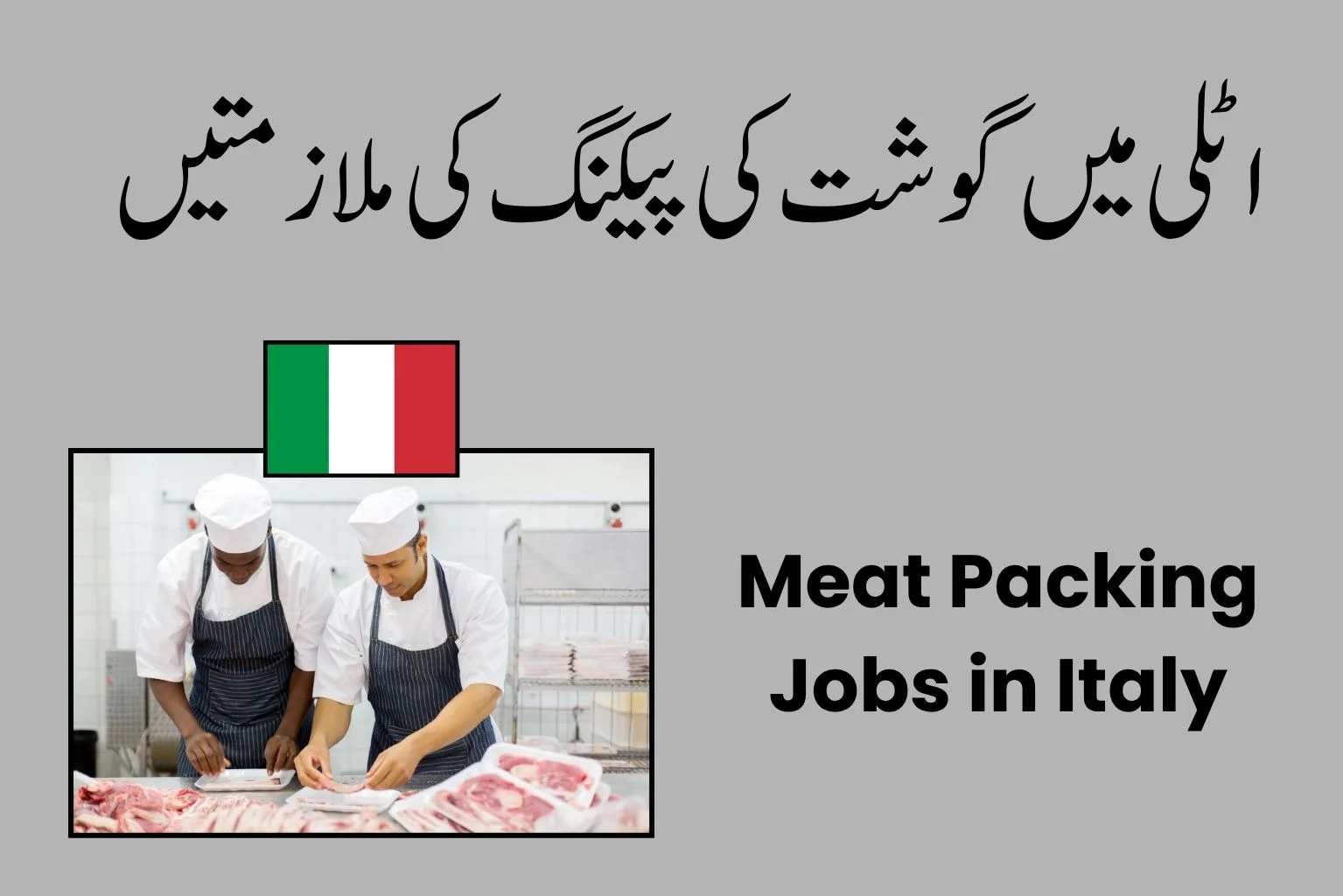
A meat packing worker may work in a meat-processing factory, poultry-processing facility, butcher-production centre, cold-storage warehouse or food-manufacturing plant.
Daily responsibilities can include:
- Packing meat products into trays, boxes or vacuum-sealed packages
- Weighing portions according to production specifications
- Labelling products
- Checking production and expiry dates
- Inspecting packaging for damage
- Placing finished products into cartons
- Preparing orders for shipment
- Cleaning workstations and equipment
- Following hygiene and food-safety rules
- Moving products to cold-storage areas
- Assisting production-line workers
- Sorting finished products
- Recording production information
- Following instructions from shift supervisors
- Wearing protective clothing and safety equipment
Some jobs may involve working in chilled environments and standing for several hours, so applicants should understand the physical nature of the work before applying.
Types of Meat Packing and Food Processing Jobs in Italy
There is no single job called “meat packing.” Employers use several Italian and English job titles when recruiting workers.
| Job Position | Typical Estimated Gross Salary |
|---|---|
| Meat Packing Worker | €1,300–€1,700/month |
| Food Packaging Worker | €1,400–€1,850/month |
| Production Line Worker | €1,400–€1,900/month |
| Food Factory Worker | €1,400–€1,900/month |
| Warehouse/Packing Worker | €1,400–€1,900/month |
| Butchery Assistant | €1,400–€2,000/month |
| Machine Operator | €1,500–€2,100/month |
| Quality Control Assistant | €1,500–€2,200/month |
| Forklift/Warehouse Operator | €1,500–€2,100/month |
| Production Supervisor | €1,900–€2,700+ /month |
These figures are estimates rather than guaranteed wages. Actual salaries depend on the applicable Italian collective agreement, city, hours worked, experience and shift pattern.
For example, a recent food-packaging advertisement in Lanciano offered €1,531.20 gross monthly, while another current job advertisement listed approximately €1,800 per month for food production and packaging work.
Indeed has also reported averages of around €1,459 per month at Samsic HR and €1,548 per month at In Job for packaging roles.
Eligibility Criteria
Requirements vary by employer, but applicants for meat packing jobs will generally be more competitive if they meet the following conditions.
Age
Applicants will normally need to be at least 18 years old.
Education
Many entry-level packing jobs accept candidates with basic or secondary education. A degree is normally unnecessary.
Indeed’s career guidance notes that a specific diploma is generally not required to become a food-packaging worker, although technical or professional qualifications can be useful.
Experience
Previous experience in any of the following areas can help:
- Meat processing
- Food packaging
- Poultry processing
- Warehouse work
- Manufacturing
- Production lines
- Order picking
- Forklift operation
- Food preparation
- Cold storage
Some employers accept beginners and provide on-the-job training.
Physical Fitness
Workers may need to:
- Stand for extended periods
- Lift boxes
- Work in cold environments
- Repeat manual tasks
- Work at production-line speed
- Work morning, evening or night shifts
Language
Basic Italian can significantly improve employment prospects.
Useful workplace terms include:
- Confezionamento – packaging
- Operaio – worker
- Produzione – production
- Magazzino – warehouse
- Industria alimentare – food industry
- Addetto al confezionamento – packaging worker
- Macelleria – butcher/meat department
Search using Italian terms rather than English alone because many local vacancies are advertised only in Italian.
Skills Employers Look For
Employers typically value:
- Attention to detail
- Good hygiene habits
- Ability to follow instructions
- Teamwork
- Reliability
- Punctuality
- Physical stamina
- Basic food-safety awareness
- Ability to work shifts
- Packaging and labelling skills
- Basic machine-operation skills
- Warehouse experience
A forklift licence can also be useful for warehouse-based roles. One recent Adecco food-packing vacancy specifically listed previous packaging experience as desirable and said a forklift qualification would be an advantage.
Documents You May Need
Prepare your documents before applying.
Job applications may require:
- Updated CV
- Passport
- Passport-size photographs
- Education certificates
- Employment/experience letters
- Training certificates
- Food-handling certificates, if available
- Forklift licence, if relevant
- Police clearance certificate where required for the immigration procedure
- Job offer or employment contract
- Work authorisation (Nulla Osta) for eligible non-EU applicants
- Visa application documents
Applicants applying from Pakistan should pay particular attention to the document checklist issued by the Italian Embassy. Current embassy guidance for subordinate employment visas includes the Nulla Osta, employment documentation, employer identification/company documents and a Pakistani Police Clearance Certificate, among other requirements.
Italy Work Visa for Meat Packing Jobs
EU citizens generally do not need a work permit to work in Italy. EURES confirms that EU citizens may work in Italy without a work permit, subject to limited exceptions.
For most non-EU applicants, the process is different.
Italy manages many employment entries through its immigration quota system known as Decreto Flussi.
For 2026, Italy authorised:
- 76,200 entries for non-seasonal subordinate employment
- 88,000 entries for seasonal subordinate employment
- 650 entries for self-employment
The 2026–2028 programme provides a total of 497,550 admissions over the three-year period.
Applicants should understand an important point: in the normal quota-based employment process, the employer plays the central role in obtaining work authorisation. A foreign worker generally cannot simply apply independently for a meat-packing visa without an eligible employment arrangement.
The Ministry of Labour explains that when hiring someone from abroad under the quota system, an Italian employer submits the request for employment authorisation through the immigration authorities.
Current 2027 Opportunity
Because it is now October 2026, applicants planning ahead should also be aware that Italy has already published operational instructions for its 2027 Decreto Flussi.
For 2027, authorised entries include 76,200 non-seasonal subordinate workers and 89,000 seasonal workers. Pre-filling of applications is scheduled from 23 October to 7 December 2026, followed by different submission dates in January and February 2027 depending on the worker category.
This does not mean every meat-packing applicant automatically qualifies; availability depends on the relevant occupational sector, nationality/category, quota and employer.
Step-by-Step Guide to Apply for Meat Packing Jobs in Italy
Step 1: Prepare a Professional CV
Create a short CV highlighting:
- Factory experience
- Meat-processing experience
- Food-packing experience
- Warehouse experience
- Machine-operation skills
- Forklift certification
- Shift availability
- Language skills
A Europass-style CV can also be useful for European applications.
Step 2: Search Using Italian Keywords
Instead of searching only for “meat packing jobs Italy,” try:
- Addetto confezionamento alimentare
- Operaio alimentare
- Addetto produzione alimentare
- Confezionamento carne
- Addetto macelleria
- Operaio industria alimentare
- Addetto imballaggio alimentare
- Magazziniere settore alimentare
Step 3: Use Reliable Job Portals
Useful platforms include:
EURES – European Employment Services
EURES provides job vacancies, CV support, employment information and guidance for people interested in working in Europe.
Cliclavoro
Cliclavoro is the employment portal of Italy’s Ministry of Labour.
Indeed Italy
Indeed regularly lists production, food-packing and warehouse vacancies.
Search packaging jobs on Indeed Italy
LinkedIn Jobs
LinkedIn also publishes food-processing, packaging and manufacturing vacancies throughout Italy.
Adecco Italy
Adecco currently publishes food-packaging and production vacancies in several Italian regions.
Step 4: Apply Directly to Employers
Read each vacancy carefully and submit your:
- CV
- Cover letter, if requested
- Relevant certificates
- Contact information
Do not send money to someone merely because they promise a job or visa.
Step 5: Attend the Interview
Employers may interview candidates by telephone or video call.
Be prepared to discuss:
- Previous factory experience
- Shift availability
- Physical work
- Food-safety knowledge
- Ability to relocate
- Italian language skills
Step 6: Employer Starts the Work-Authorisation Process
If you are outside the EU and need sponsorship, the employer normally needs to complete the appropriate immigration process and obtain the required Nulla Osta where applicable.
Italy’s official visa information confirms that subordinate employment visas are linked to work authorisation issued under the relevant immigration rules.
Step 7: Apply for the Italian Employment Visa
Once the required approval has been issued, the worker follows the instructions of the relevant Italian embassy or consulate and submits the visa application with the required documentation.
Do not purchase expensive non-refundable travel tickets before the necessary approvals are completed.
Step 8: Complete Residence Formalities in Italy
After arriving legally for work, the employee must complete the required residence procedures.
Italian immigration guidance states that foreign workers must follow the residence-permit procedure after entry. Current rules and procedures should always be checked at the time of arrival because immigration legislation can change.
Best Italian Regions to Search
Food manufacturing and packaging jobs can appear throughout Italy, but job seekers may find opportunities in industrial and agricultural regions such as:
- Lombardy
- Emilia-Romagna
- Veneto
- Piedmont
- Tuscany
- Marche
- Lazio
- Abruzzo
Cities and provinces around Parma, Modena, Bologna, Verona, Mantua, Cremona and other industrial areas frequently have food-production activity.
Do not restrict yourself to major tourist cities such as Rome or Milan. Factories are often located in smaller industrial municipalities.
How to Avoid Fake Italy Job Offers
International applicants should be careful because fake visa and employment offers are common.
Never trust someone simply because they use words such as “100% visa guarantee” or “direct embassy approval.”
Before accepting an offer:
- Research the company.
- Check its official website.
- Confirm its business address.
- Ask for a written employment offer.
- Verify the recruiter’s email domain.
- Never pay for a fake Nulla Osta.
- Do not send your passport to unknown social-media agents.
- Confirm visa requirements through official Italian government sources.
Adecco itself warns candidates about fraudulent online job advertisements and phishing attempts.
Frequently Asked Questions
1. Can foreigners apply for meat packing jobs in Italy?
Yes. Foreign workers can apply for suitable vacancies, but non-EU applicants who do not already have the right to work in Italy will normally require the appropriate employment and immigration authorisation.
2. How much does a meat packing worker earn in Italy?
Many packing and food-production vacancies currently fall around €1,400–€1,850 gross per month, although actual pay can be lower or higher depending on the collective agreement, experience, city, hours and shift allowances.
3. Do I need previous experience?
Not always. Some entry-level employers provide workplace training. However, experience in food processing, meat production, packaging or warehouse work improves your chances.
4. Do meat packing jobs provide visa sponsorship?
Some employers may be able to recruit non-EU workers under the relevant immigration procedures, but visa sponsorship should never be assumed. Read the vacancy carefully and ask the employer whether they can legally recruit a worker who is currently outside Italy.
5. Is Italian language compulsory?
It depends on the employer. Some international workplaces may accept limited Italian, but basic Italian is strongly recommended because safety instructions, production procedures and communication with supervisors may be in Italian.
6. Can I apply directly from Pakistan, India, Bangladesh or another non-EU country?
You may search and apply for legitimate jobs from abroad. However, receiving a job offer does not automatically give you permission to enter Italy. The employer and employee must follow the applicable Italian immigration process, including work authorisation and visa requirements where required.
Conclusion
Meat packing jobs in Italy in 2026 and 2027 can offer a practical route into food manufacturing for candidates with factory, warehouse, meat-processing or packaging experience. Many entry-level positions do not require advanced academic qualifications, while experienced employees can progress into machine operation, warehouse management, quality control or supervisory roles.
Current vacancies show that many food-packaging positions offer approximately €1,400 to €1,850 gross per month, with higher salaries possible for skilled roles, overtime, night work or supervisory responsibilities.
For international candidates, however, finding a legitimate employer is the most important step. Use recognised portals such as EURES, Cliclavoro, Indeed Italy, LinkedIn and established recruitment agencies. Prepare a professional CV, search using Italian job titles, apply directly to genuine companies, and verify every offer before providing documents or paying fees.
Non-EU applicants should also follow Italy’s official Decreto Flussi and work-visa rules rather than relying on social-media agents promising guaranteed visas.
With consistent applications, realistic expectations and careful attention to official immigration procedures, meat packing and food-processing jobs can be a worthwhile opportunity for people seeking employment and work experience in Italy.