Italy offers attractive career opportunities for professionals working in occupational health, workplace safety, construction safety, and Health, Safety and Environment (HSE). For experienced candidates as well as qualified professionals hoping to build an international career, Safety Officer jobs in Italy can provide competitive salaries, professional development, and experience working under European workplace safety standards.
Safety professionals are employed across construction, manufacturing, engineering, energy, logistics, infrastructure, chemicals, oil and gas, and other industrial sectors. Job titles vary considerably. An employer may advertise a vacancy as Safety Officer, HSE Officer, HSE Specialist, Safety Engineer, ASPP, RSPP, EHS Specialist, QHSE Specialist, or HSE Manager.
According to salary information published by Indeed Italy in September 2026, the average reported base salary for an HSE Manager in Italy is approximately €43,518 per year, although actual earnings vary considerably according to experience, location, qualifications, responsibilities, and employer.
For applicants from outside the European Union, however, getting a job offer is only part of the process. Candidates must also understand Italy’s work authorization and visa procedures before making travel arrangements.
Why Consider a Safety Officer Job in Italy?
Workplace health and safety is an important responsibility for Italian employers. Companies operating industrial plants, factories, construction projects, warehouses, engineering facilities and other potentially hazardous workplaces require trained professionals to identify hazards and help maintain safe working environments.
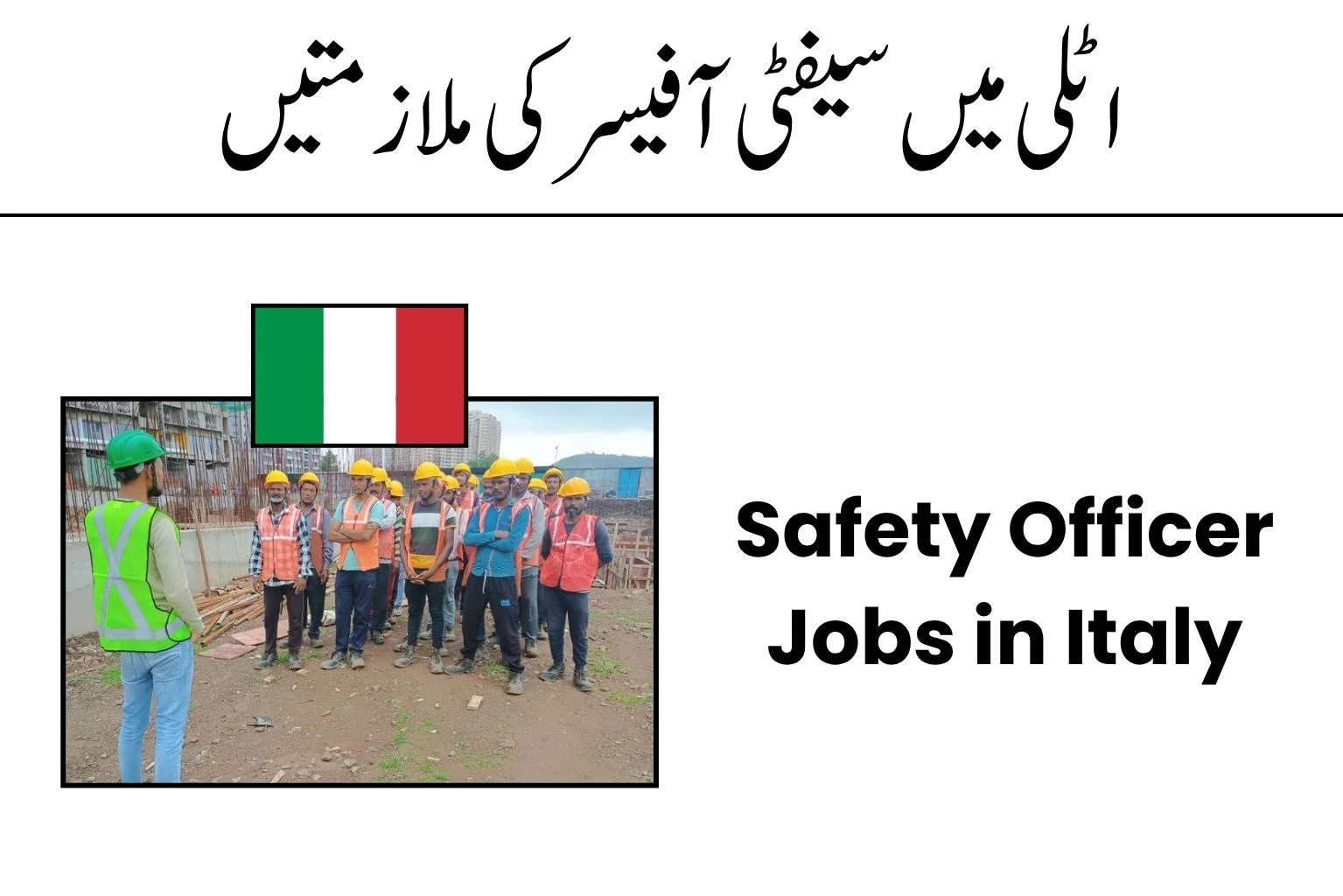
A safety professional may be responsible for workplace inspections, risk assessments, safety documentation, accident prevention, emergency procedures, employee training and monitoring compliance with company and legal requirements.
One advantage of developing a safety career in Italy is the variety of industries in which these skills can be used. Professionals can potentially move between construction, manufacturing, energy, infrastructure and other technical sectors as their experience grows.
The role can also provide a pathway toward more senior positions. Someone entering the profession as a junior safety or HSE specialist may eventually progress into supervisory, RSPP, HSE Manager or QHSE management roles after acquiring the appropriate experience and qualifications.
Italy’s main occupational health and safety framework is closely associated with Legislative Decree 81/2008 (D.Lgs. 81/2008). Candidates applying for Italian safety positions should therefore become familiar with Italian workplace-safety terminology and requirements.
Types of Safety Officer Jobs in Italy and Expected Salaries
There is no single salary applicable to every safety job. Pay depends on the sector, seniority, city, contractual arrangement, certifications and the scope of responsibility.
Recent Indeed Italy data put the average HSE Manager base salary at about €43,518 annually, with a reported general range of approximately €30,003 to €63,121 per year. Indeed also notes that experienced HSE managers can command substantially higher compensation in some circumstances.
The following figures should therefore be treated as approximate gross annual salary ranges rather than guaranteed salaries:
| Position | Approximate Gross Salary |
|---|---|
| Junior Safety/HSE Officer | €25,000–€32,000 per year |
| HSE/Safety Specialist | €30,000–€40,000 per year |
| Safety Engineer | €32,000–€45,000 per year |
| ASPP / Prevention & Protection Specialist | €28,000–€40,000 per year |
| HSE Supervisor | €32,000–€45,000 per year |
| RSPP / Senior Safety Professional | €35,000–€55,000+ per year |
| HSE Manager | €40,000–€60,000+ per year |
| Senior HSE/QHSE Manager | €50,000–€70,000+ in some roles |
These ranges are indicative. For example, current Indeed data show an average of around €43,500 for HSE Managers nationally, while individual vacancies and employers can fall significantly above or below that figure.
Locations with substantial manufacturing, construction, engineering and industrial activity can provide more opportunities. Indeed has reported HSE vacancies and salary data across areas including Lombardy, Veneto, Emilia-Romagna, Lazio and other Italian regions.
Common Responsibilities of a Safety Officer
The exact duties depend on the employer and industry, but a Safety or HSE Officer may be expected to:
- Inspect workplaces and identify unsafe conditions.
- Conduct or support risk assessments.
- Monitor the use of personal protective equipment (PPE).
- Help develop safety procedures and emergency plans.
- Investigate incidents, accidents and near misses.
- Prepare safety reports and maintain records.
- Conduct toolbox talks and safety training.
- Participate in internal and external safety audits.
- Monitor contractor compliance on construction or industrial sites.
- Support fire prevention and emergency preparedness.
- Work with supervisors and managers to reduce occupational risks.
- Help ensure compliance with applicable Italian health and safety legislation.
For senior positions, responsibilities can expand into environmental compliance, management systems, audits, corporate safety strategy and leadership of an HSE team.
Eligibility Criteria for Safety Officer Jobs in Italy
Requirements differ between vacancies, so candidates should always read the individual job advertisement carefully.
Employers commonly look for candidates with a diploma, bachelor’s degree or other relevant qualification in areas such as occupational health and safety, engineering, environmental science, industrial technology or a related technical discipline.
Experience is another major consideration. Junior vacancies may accept candidates with limited experience, while Safety Engineer, HSE Supervisor, RSPP and HSE Manager positions commonly require several years of relevant professional experience.
International certifications can strengthen a candidate’s CV. Depending on the position, employers may value qualifications such as:
- NEBOSH International General Certificate
- IOSH qualifications
- ISO 45001 training or auditor experience
- ISO 14001 knowledge
- First Aid training
- Fire Safety training
- Risk Assessment training
- Construction or industrial safety certifications
However, international certificates do not automatically replace Italian qualifications or legally prescribed training for regulated functions such as ASPP/RSPP. Applicants should check the requirements of the specific position before assuming that a foreign certificate is sufficient.
Skills That Can Improve Your Chances
Technical qualifications are important, but employers also look for practical abilities.
Knowledge of hazard identification, risk assessment, incident investigation, permit-to-work systems, emergency response, PPE, occupational health procedures and safety-management systems can make a candidate more competitive.
Knowledge of ISO 45001 and, for environmental responsibilities, ISO 14001 may be particularly useful for HSE and QHSE positions.
Language ability can also make a significant difference. Some multinational employers use English extensively, but Italian is valuable—and for many site-based positions may be necessary—because safety instructions must be clearly communicated to employees, contractors and local authorities.
Candidates planning a long-term safety career in Italy should therefore consider learning Italian even when a particular vacancy is advertised in English.
Documents to Prepare Before Applying
Preparing your documents before starting applications can save considerable time.
Candidates should normally have an updated CV, preferably adapted to the European employment market. Include your education, safety certifications, relevant experience, industries worked in, technical skills and languages.
Depending on the employer and immigration route, you may eventually need:
- Valid passport
- Updated CV/resume
- Educational certificates and transcripts
- Employment/experience certificates
- Safety training certificates
- Professional certifications
- Passport photographs
- Employment contract or formal job offer
- Work authorization documentation where required
- Visa application documents
- Proof of accommodation or other supporting documentation if requested
- Certified translations or legalization/recognition documents where applicable
Do not send money or original documents to an unknown recruiter without verifying the employer and recruitment process.
How to Find Safety Officer Jobs in Italy
One of the safest places to begin is EURES, the official European employment network. It provides job-search services and information about employment and living conditions across participating European countries. EURES states that its vacancies originate from public employment services and participating EURES members and partners.
Useful websites include:
EURES – Official European Employment Portal:
Search EURES Jobs
Indeed Italy:
Search Jobs on Indeed Italy
LinkedIn Jobs:
Search LinkedIn Jobs
Italian Ministry of Labour:
Italian Ministry of Labour
EURES also notes that Italy’s public employment system and online job-search resources can be used to locate vacancies, while EURES advisers provide information on working and moving within Europe.
When searching, do not use only the phrase “Safety Officer.” Try several keywords, including HSE Officer, HSE Specialist, HSE Manager, Safety Engineer, EHS Specialist, ASPP, RSPP, QHSE, Health and Safety, Tecnico Sicurezza and Sicurezza sul Lavoro.
Step-by-Step Guide to Apply for Safety Officer Jobs in Italy
Step 1: Prepare a Professional CV
Create a clean CV highlighting safety experience rather than simply listing every job you have held.
Mention major projects, industries, safety responsibilities, audits, inspections, certifications, accident-prevention work and any measurable achievements.
Step 2: Gather Your Certificates
Keep high-quality scanned copies of your degree, diploma, experience letters, NEBOSH/IOSH certificates and other professional qualifications.
Step 3: Search Multiple Job Titles
Search EURES, LinkedIn, Indeed Italy and employers’ own career websites.
Use both English and Italian keywords because many vacancies will be advertised primarily in Italian.
Step 4: Read the Requirements Carefully
Check whether the vacancy requires Italian language skills, ASPP/RSPP qualifications, a particular degree, industry experience or an existing right to work in Italy.
Do not submit the same generic CV to every vacancy.
Step 5: Apply Directly
Where possible, apply through the employer’s official career website or a recognized recruitment portal. Include a short, targeted cover letter explaining your safety experience and why it matches the vacancy.
Step 6: Prepare for the Interview
Be prepared for technical questions concerning risk assessments, incident investigation, emergency procedures, working at height, confined spaces, lifting operations, PPE, ISO 45001 and your previous site experience.
Step 7: Discuss Work Authorization
If you are a non-EU applicant, establish whether the employer is able and willing to follow the applicable work-authorization procedure. Do not assume that every advertised vacancy includes visa sponsorship.
Step 8: Complete the Visa Process
Once the appropriate authorization and employment requirements have been completed, follow the instructions of the competent Italian diplomatic mission for the relevant national work visa.
Italy Work Visa Requirements for Non-EU Applicants
Non-EU nationals generally need the appropriate authorization before they can legally work in Italy.
For ordinary employment from abroad under the quota system, Italy’s Ministry of Labour explains that the employer submits the request for authorization to employ a non-EU worker through the immigration procedure. The applicable process is linked to Italy’s programmed entry quotas and the nulla osta (work authorization).
Italy currently has a 2026–2028 Decreto Flussi framework. The government authorized 164,850 total entries for 2026, followed by 165,850 for 2027 and 166,850 for 2028 across the categories covered by the decree. These totals should not be interpreted as 164,850 Safety Officer vacancies; they cover multiple employment categories.
For the 2026 quota process, applications can continue until 31 December 2026, subject to quota availability.
The exact immigration route depends on the candidate and job. Highly qualified workers may also have immigration routes outside the ordinary quota mechanism where the relevant conditions are satisfied.
For visa information, candidates should use the Italian Ministry of Foreign Affairs’ official visa portal:
Official Visa for Italy Portal
Never assume that receiving an email offering employment automatically means a visa has been approved. Verify the company, employment contract and immigration procedure through official sources.
Tips for International Applicants
International applicants can improve their prospects by focusing on vacancies where their existing experience closely matches the employer’s industry.
For example, someone with several years of oil and gas HSE experience should initially target energy, industrial construction and engineering employers rather than applying indiscriminately to every safety vacancy.
Learning basic or intermediate Italian can also significantly strengthen an application. Safety work depends heavily on communication, and being able to explain hazards and instructions clearly is an important professional advantage.
Finally, beware of recruitment scams. Genuine recruitment processes should be independently verifiable. Avoid anyone promising a “guaranteed Italy work visa” in exchange for large upfront payments.
Frequently Asked Questions
1. Can foreigners apply for Safety Officer jobs in Italy?
Yes. Foreign candidates can apply for Safety Officer and HSE vacancies. However, non-EU nationals must also satisfy the applicable Italian immigration and work-authorization requirements. A job application itself does not provide permission to work.
2. What is the salary of a Safety Officer in Italy?
Salary depends heavily on the job title, experience and employer. For a useful benchmark, Indeed reported an average base salary of approximately €43,518 per year for HSE Managers in Italy as of September 2026, with a broad reported range of roughly €30,003–€63,121. Junior safety positions can pay less, while experienced management roles can pay more.
3. Is NEBOSH accepted in Italy?
NEBOSH can be a valuable international safety qualification and may strengthen an applicant’s profile, particularly with multinational companies. However, it should not automatically be treated as a substitute for Italian qualifications or mandatory training required for specific legally defined safety roles.
4. Is Italian language compulsory?
It depends on the vacancy. Some multinational companies advertise positions requiring strong English, but Italian is commonly valuable and may be required for roles involving local workers, documentation, regulations and site communication.
5. Can I apply for an Italy work visa without a job offer?
For the normal employer-sponsored employment route, obtaining suitable employment and completing the employer-side work authorization process are central parts of the procedure. Candidates should check the exact visa category applicable to their situation through Italy’s official visa portal.
6. Where should I search for genuine Safety Officer vacancies?
Start with EURES, employers’ official career pages, Indeed Italy and LinkedIn Jobs. Search using both English and Italian job titles, and independently verify employers before submitting sensitive documents or paying any fees.
Conclusion
Safety Officer jobs in Italy in 2026 can offer a promising career path for qualified professionals with experience in occupational safety, construction, manufacturing, engineering, energy and related industries. Opportunities range from junior HSE and safety positions to Safety Engineer, ASPP/RSPP, HSE Supervisor and HSE Manager roles.
Candidates with recognized qualifications, strong practical safety experience, knowledge of ISO standards and good communication skills are better positioned to compete for vacancies. Learning Italian can provide an additional advantage, particularly for site-based positions.
For non-EU applicants, the most important approach is to follow the process in the correct order: prepare a strong CV, search for genuine vacancies, apply directly to reputable employers, secure appropriate employment, complete the required work-authorization procedure and then follow the official visa process.
Italy’s immigration and quota rules can change, so applicants should always verify current requirements through the Italian Ministry of Labour and Ministry of Foreign Affairs rather than relying solely on recruiters or social-media posts.
If your qualifications and experience match the requirements, start by preparing your CV and searching current Safety Officer, HSE, ASPP, RSPP and Safety Engineer vacancies through reputable portals. Applying consistently to positions that genuinely match your experience gives you a much stronger chance than sending generic applications to every available job.