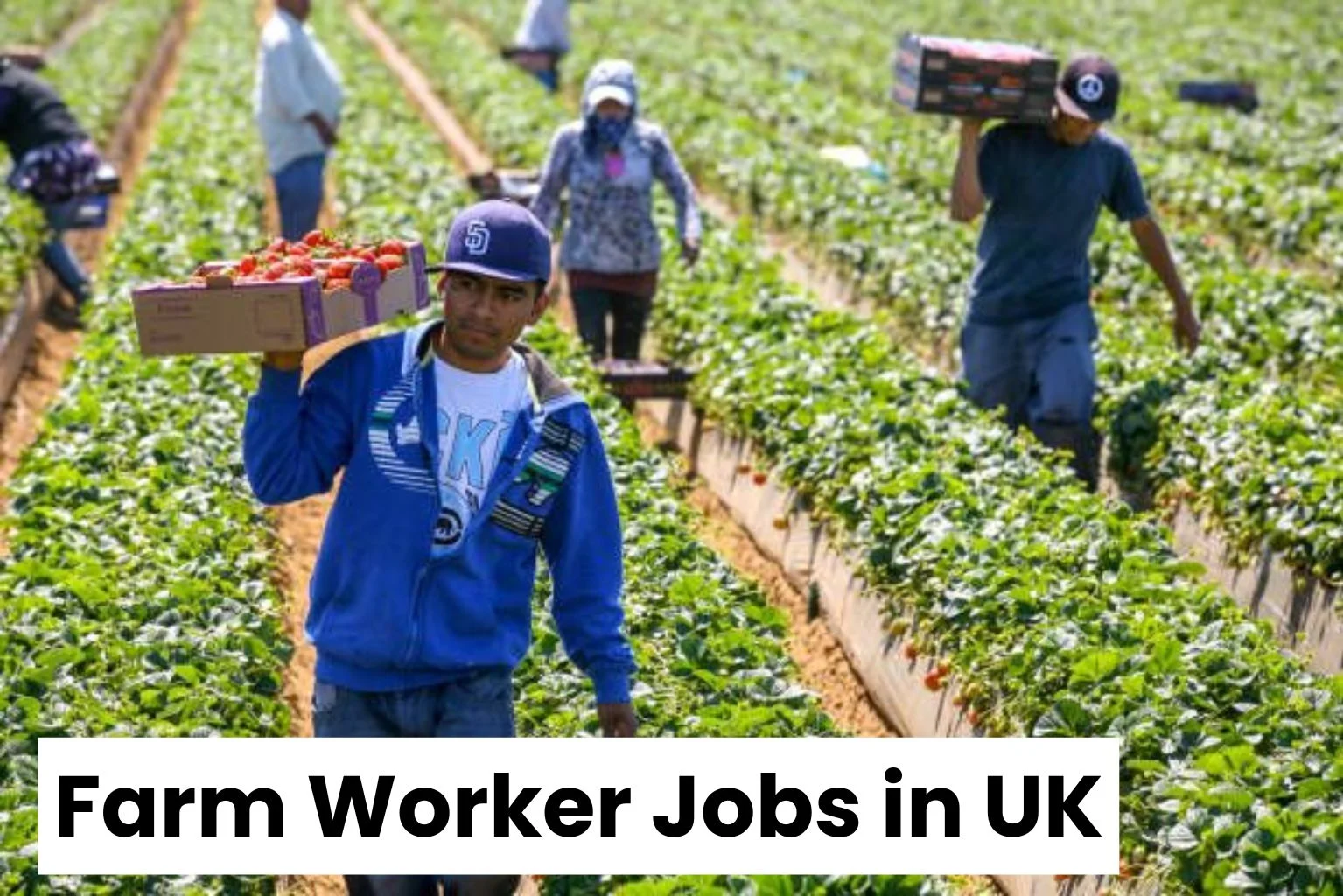
Agriculture jobs in United Kingdom are an attractive option for people interested in agriculture, fruit and vegetable picking, horticulture, livestock farming and seasonal agricultural work. Unlike many other entry-level jobs, certain types of UK farm work have a dedicated immigration route that allows eligible overseas workers to come to Britain for temporary seasonal employment.
The United Kingdom has a large agricultural and horticultural industry that requires workers throughout different parts of the year. Farms recruit workers for fruit picking, vegetable harvesting, flower production, greenhouse work, crop grading, packing and other agricultural duties.
Jobs may be advertised under titles such as Farm Worker, Seasonal Farm Worker, Fruit Picker, Vegetable Picker, Harvest Worker, Horticulture Worker, Agricultural Worker, General Farm Worker, Poultry Worker, Tractor Driver or Farm Operative.
One particularly important opportunity for international applicants is the UK Seasonal Worker visa. It permits eligible overseas workers to undertake horticultural work for up to six months. There is also a shorter seasonal route for certain poultry-production jobs.
For 2026, the UK government has allocated 41,000 Seasonal Worker places for horticulture and 1,900 places for poultry production, making agricultural seasonal work one of the more clearly defined temporary work routes for overseas applicants.
Why Consider Farm Worker Jobs in the UK?
Agriculture is physically demanding, but farm work can provide several advantages, particularly for people who enjoy outdoor work and practical employment.
Unlike many professional careers, entry-level agricultural jobs generally do not require a university degree. Employers often place greater importance on reliability, physical fitness, willingness to work flexible hours and the ability to follow instructions.
The UK’s National Careers Service states that there is no single set route to becoming a farm worker. Previous farm experience can be helpful, but direct applications are also possible. Knowledge of basic mechanics and an interest in farming can also strengthen an applicant’s prospects.
Potential advantages include:
- Entry-level agricultural opportunities
- Seasonal employment for overseas applicants
- Jobs that may not require a university degree
- Opportunities to work outdoors
- Practical agricultural experience
- Potential overtime during busy harvest periods
- Opportunities to learn machinery and farming skills
- Possible accommodation provided or arranged by some employers
- Career progression into supervisory or agricultural-management roles
The National Careers Service notes that some farm workers may also receive benefits such as subsidised accommodation, travel pay, vehicle use, production bonuses or profit-sharing arrangements, although these benefits are not guaranteed and depend on the employer.
Types of Farm Worker Jobs Available in the UK
Agriculture covers many different activities, so “farm worker” can describe several types of jobs.
| Farm Job | Typical Pay Estimate |
|---|---|
| Fruit Picker | £12.71–£15+ per hour |
| Vegetable Picker | £12.71–£15+ per hour |
| Horticulture Worker | £12.71–£16+ per hour |
| General Farm Worker | £24,000–£32,000 per year |
| Poultry Farm Worker | £24,000–£32,000 per year |
| Dairy Farm Worker | £25,000–£34,000 per year |
| Livestock Worker | £25,000–£34,000 per year |
| Tractor Driver | £27,000–£38,000+ per year |
| Farm Supervisor | £30,000–£40,000+ per year |
These are approximate market ranges rather than guaranteed salaries.
From 1 April 2026, the UK National Living Wage for workers aged 21 and over is £12.71 per hour. Workers aged 18–20 have a minimum rate of £10.85 per hour, while qualifying under-18 and apprentice rates are £8.00 per hour.
Actual farm earnings can vary because agricultural work may involve overtime, productivity bonuses or piece-rate systems. Regardless of the payment method, employers must comply with applicable UK minimum-wage requirements.
Common Farm Worker Duties
Farm worker responsibilities depend heavily on the type of farm and the season.
On fruit and vegetable farms, workers may:
- Pick strawberries, apples, berries or other fruits
- Harvest vegetables
- Plant crops
- Weed growing areas
- Sort harvested produce
- Grade fruits and vegetables
- Pack agricultural products
- Work inside greenhouses
- Maintain crop-growing areas
- Prepare produce for transport
General farm workers may also:
- Prepare land
- Maintain fences
- Clean agricultural buildings
- Operate basic machinery
- Load agricultural products
- Assist with harvesting
- Carry out general maintenance
- Monitor crops
- Use handheld agricultural equipment
The National Careers Service states that workers on arable and horticultural farms may help prepare land, transport and grade crops, use forklifts, maintain machinery and farm buildings and support plant and soil health.
Livestock and Dairy Farm Jobs
Not all UK farm jobs involve crops.
Livestock farms employ workers to care for cattle, sheep, pigs and other farm animals.
Typical responsibilities can include:
- Feeding animals
- Cleaning animal housing
- Monitoring animal health
- Moving livestock
- Maintaining farm equipment
- Assisting with animal welfare
- Cleaning farm facilities
On dairy farms, workers may also operate milking equipment and assist with routine cattle management.
The National Careers Service confirms that livestock and dairy farm workers may feed animals, clean housing areas, operate milking equipment and maintain animal welfare, biosecurity and workplace safety standards.
Fruit Picking Jobs in the UK
Fruit picking is one of the best-known forms of seasonal agricultural work.
UK farms may recruit seasonal employees to harvest:
- Strawberries
- Raspberries
- Blueberries
- Blackberries
- Apples
- Pears
- Cherries
- Plums
Depending on the crop, workers may be employed outdoors, inside tunnels or within greenhouse environments.
Fruit picking can involve repetitive physical activity. Workers may need to stand, walk, bend and carry containers for several hours.
Because harvesting periods are time-sensitive, workers may sometimes work longer hours during busy weeks.
Vegetable Picking and Horticulture Jobs
Vegetable and horticulture farms may recruit workers for crops such as:
- Lettuce
- Cabbage
- Broccoli
- Cauliflower
- Asparagus
- Potatoes
- Onions
- Tomatoes
- Peppers
The UK Seasonal Worker visa specifically covers eligible horticultural work, including certain fruit, vegetable and flower-production activities.
Under current immigration rules, Seasonal Worker visa holders can normally undertake horticultural work in the UK for up to six months in any 10-month period, subject to their sponsorship and visa conditions.
UK Seasonal Worker Visa for Farm Jobs
One of the major differences between farm work and many other low-skilled UK jobs is that eligible horticultural employment has a specific temporary visa route.
The Seasonal Worker visa allows overseas applicants to come to the UK for:
- Horticultural work for up to six months
- Eligible poultry-production work during the annual poultry season
The visa does not provide permanent employment or permanent residence.
For horticulture, applicants can apply throughout the year, depending on sponsorship and available work.
For poultry-production work, the permitted period is from 2 October to 31 December, and the visa application must generally be submitted by 15 November.
Seasonal Worker Visa Quota for 2026
The latest government sponsor guidance states that the 2026 Seasonal Worker allocation is:
| Sector | 2026 Allocation |
|---|---|
| Horticulture | 41,000 places |
| Poultry Production | 1,900 places |
| Total | 42,900 places |
The quota is divided among authorised scheme operators responsible for recruiting and sponsoring workers.
This does not mean that every applicant is guaranteed a position. Applicants must first be selected by an approved operator and receive a valid Certificate of Sponsorship.
Who Can Apply for the UK Seasonal Worker Visa?
According to GOV.UK, an applicant must generally:
- Be at least 18 years old
- Have a valid Certificate of Sponsorship reference number
- Be sponsored through an approved Seasonal Worker scheme operator
- Meet the financial-maintenance requirement
- Meet the relevant immigration requirements
Applicants usually need at least £1,270 in available funds to demonstrate that they can support themselves after arriving in Britain. The money generally needs to have been held for at least 28 consecutive days, unless the sponsor officially certifies maintenance for the worker.
Approved Seasonal Worker Scheme Operators
A very important feature of this route is that workers should apply through an approved scheme operator.
According to current government guidance for seasonal farm workers, approved operators include:
- AGRI-HR
- Concordia (UK) Ltd
- Fruitful Jobs
- HOPS Labour Solutions Ltd
- Pro-Force Limited
- RE Recruitment for poultry workers
The government’s guidance specifically advises applicants without an existing right to work in the UK to obtain seasonal work through approved operators.
This helps applicants distinguish legitimate recruitment channels from fraudulent offers.
Check the latest official guidance here:
UK Government Seasonal Farm Work Guidance
Seasonal Worker Visa Cost
As of October 2026, the Seasonal Worker visa application fee is £340.
Applicants should also budget for other legitimate expenses such as:
- Travel to the UK
- Passport costs
- Required documentation
- Transport after arrival
- Initial living expenses
- Accommodation where it is not provided
Applicants should verify all costs before paying anyone.
Be cautious if an individual recruiter demands a large payment in exchange for a supposedly guaranteed UK farm visa.
How Long Can You Stay in the UK?
For horticultural work, the Seasonal Worker visa permits a stay of up to six months, subject to the visa rules and employment period on the Certificate of Sponsorship.
Poultry workers can stay during the permitted poultry-production period, which runs from October to December.
A worker can enter the UK up to 14 days before the employment start date where permitted by the visa validity.
Can Seasonal Farm Workers Bring Their Families?
No.
The Seasonal Worker immigration route does not allow workers to bring partners or children as dependants.
This is an important consideration for applicants planning to work in Britain temporarily.
Can a Seasonal Farm Worker Settle Permanently in the UK?
No.
The Seasonal Worker route is temporary and is not a route to UK settlement.
Workers are also not permitted to take permanent employment through this visa.
If someone wants to remain in Britain long term, they would need to qualify for another immigration route separately.
What Can You Do on a Seasonal Worker Visa?
A worker can:
- Work in the sponsored job shown on the Certificate of Sponsorship
- Study, subject to applicable conditions
However, the visa generally does not allow a worker to:
- Take a permanent job
- Work in an unrelated second job
- Receive public funds
- Bring dependent family members
These restrictions are stated in current GOV.UK Seasonal Worker guidance.
Documents Required for Farm Worker Jobs
Job requirements vary, but applicants should prepare:
- Valid passport
- Updated CV
- Previous employment details
- Farming or agricultural experience certificates, if available
- Driving licence, if relevant
- Tractor or machinery certificates, if applicable
- References from previous employers
For the Seasonal Worker visa, applicants may also need:
- Certificate of Sponsorship reference number
- Evidence of required funds
- Passport or travel document
- Any additional documents requested during the visa application process
The Certificate of Sponsorship is an electronic reference rather than a physical paper certificate. It is normally valid for three months from the date it is assigned.
Skills Employers Look for
Farm work is practical and often physically demanding.
Useful characteristics include:
Physical Fitness
Workers may stand, bend, lift and walk for much of the working day.
Reliability
Harvesting schedules can be strict, so farms rely on workers arriving on time.
Teamwork
Workers frequently operate in harvesting teams.
Attention to Detail
Fruit, vegetables and other crops may need to be sorted according to size and quality.
Ability to Work Outdoors
Agricultural work may continue in cold, wet or warm weather.
Machinery Skills
Experience using tractors, forklifts or agricultural machinery can improve opportunities for more specialised positions.
The National Careers Service highlights teamwork, manual skills, attention to detail, equipment operation, independent working and basic digital skills as relevant to farm work.
Where to Find Genuine Farm Worker Jobs in the UK
1. GOV.UK Find a Job
Candidates who already have permission to work in the UK can use the government’s job-search service.
The official seasonal-work guidance recommends searching for terms such as fruit picking and vegetable picking.
Search UK Jobs on GOV.UK Find a Job
2. National Careers Service
The National Careers Service provides information about farm-worker duties, qualifications, career progression and current opportunities.
UK Farm Worker Career Information
3. Approved Seasonal Worker Operators
Applicants outside the UK who require a Seasonal Worker visa should concentrate on approved scheme operators rather than random recruiters.
Current government guidance lists AGRI-HR, Concordia, Fruitful Jobs, HOPS Labour Solutions, Pro-Force and RE Recruitment for relevant seasonal recruitment.
4. Farm and Agricultural Employer Websites
Applicants who already have legal permission to work in Britain can also apply directly to farms, agricultural businesses and recruitment agencies.
Step-by-Step Guide to Applying for UK Farm Worker Jobs
Step 1: Decide Which Type of Farm Job You Want
Choose whether you are interested in:
- Fruit picking
- Vegetable harvesting
- Greenhouse work
- Flower production
- Poultry work
- Dairy farming
- Livestock work
- General agriculture
For overseas candidates requiring the Seasonal Worker visa, horticulture and eligible poultry work are particularly relevant.
Step 2: Prepare a Simple CV
Include:
- Name and contact details
- Employment history
- Agricultural experience
- Harvesting experience
- Machinery experience
- Driving experience
- Relevant certificates
- Languages spoken
A university degree is usually unnecessary for basic seasonal farm positions.
Step 3: Apply Through an Approved Scheme Operator
If you require a Seasonal Worker visa, apply through an authorised operator.
Avoid unverified social-media agents who claim they can personally issue a UK visa.
The operator must select you and provide a Certificate of Sponsorship before you can make the Seasonal Worker visa application.
Step 4: Receive Your Certificate of Sponsorship
If selected, your authorised sponsor will issue your Certificate of Sponsorship reference.
You will need this reference for the visa application.
Step 5: Prepare Your Financial Evidence
Unless your sponsor certifies maintenance, you normally need to show at least £1,270 held for the required period.
Step 6: Apply for the Seasonal Worker Visa
You can generally apply up to three months before the job start date shown on your Certificate of Sponsorship.
According to GOV.UK, once the application and identity/document requirements are completed, applicants will usually receive a visa decision within approximately three weeks, although processing times can vary.
Official application information:
Apply for a UK Seasonal Worker Visa
Step 7: Read Your Employment Contract
Before travelling, carefully check:
- Hourly wage
- Guaranteed hours
- Job location
- Contract duration
- Accommodation charges
- Transport arrangements
- Any deductions
- Overtime arrangements
- Expected working conditions
Keep copies of your contract and important documents.
Avoiding UK Farm Job Scams
The existence of a genuine Seasonal Worker route has unfortunately also created opportunities for fraudulent recruiters.
Be cautious when someone promises:
- “100% guaranteed UK visa”
- “Farm visa without sponsor”
- “No documents required”
- “Permanent UK farm visa”
- “Pay now and receive visa tomorrow”
These claims should be treated with caution.
A genuine Seasonal Worker application requires authorised sponsorship and compliance with UK immigration rules.
The UK government specifically directs overseas applicants without existing work rights toward approved scheme operators.
Career Progression
Farm work can also provide longer-term career development for people who already have the right immigration status to work in Britain.
With training and experience, workers may progress to positions such as:
Farm Worker → Senior Farm Worker → Team Leader → Farm Supervisor → Assistant Farm Manager → Farm Manager
The National Careers Service states that experienced workers can progress into supervision, contracting, machinery work, agricultural supplies or assistant farm-management positions.
Frequently Asked Questions
1. Can foreigners apply for farm jobs in the UK?
Yes. Overseas workers can apply for eligible seasonal horticulture and poultry jobs through the Seasonal Worker route if they meet the visa requirements and obtain sponsorship from an approved scheme operator.
2. How much do farm workers earn in the UK?
Pay varies according to the job, hours and employer. From 1 April 2026, workers aged 21 and above are generally entitled to a National Living Wage of at least £12.71 per hour, subject to applicable UK wage rules.
3. Do UK farm jobs offer visa sponsorship?
Eligible seasonal horticulture and poultry jobs can be sponsored through the Seasonal Worker route. However, recruitment must take place through an authorised scheme operator rather than assuming that any individual farm job advertisement provides sponsorship.
4. Is IELTS required for a UK Seasonal Worker visa?
The current GOV.UK eligibility requirements for the Seasonal Worker visa do not list an English-language test such as IELTS as a general eligibility requirement. Applicants must still satisfy all other visa requirements.
5. How long can I stay in the UK as a seasonal farm worker?
Horticultural Seasonal Workers can generally stay for up to six months, while poultry workers can work during the specified October-to-December seasonal period.
6. Can I bring my wife, husband or children on a Seasonal Worker visa?
No. Partners and children cannot accompany a worker as dependants under this route.
Conclusion
Farm worker jobs in the UK can provide valuable employment for people interested in agriculture, horticulture, crop harvesting, livestock farming and food production. Opportunities range from fruit and vegetable picking to dairy farming, livestock care, tractor driving and agricultural supervision.
For international applicants, the Seasonal Worker visa is particularly important because it provides an official route for eligible temporary agricultural employment.
For 2026, the UK Seasonal Worker scheme provides 41,000 horticulture places and 1,900 poultry-production places, for a total allocation of 42,900.
Applicants must be at least 18, obtain sponsorship from an authorised operator and satisfy the financial and immigration requirements. The current Seasonal Worker visa fee is £340, and applicants usually need £1,270 in maintenance funds unless the sponsor certifies support.
People interested in these opportunities should use official sources, apply through approved Seasonal Worker operators and carefully review employment contracts before travelling.
Farm work can be physically demanding, but for candidates who are prepared for outdoor work, flexible hours and busy harvest periods, it can provide valuable international experience and an opportunity to earn legally in the United Kingdom’s agricultural sector.
The safest starting point is the official UK government Seasonal Worker guidance: