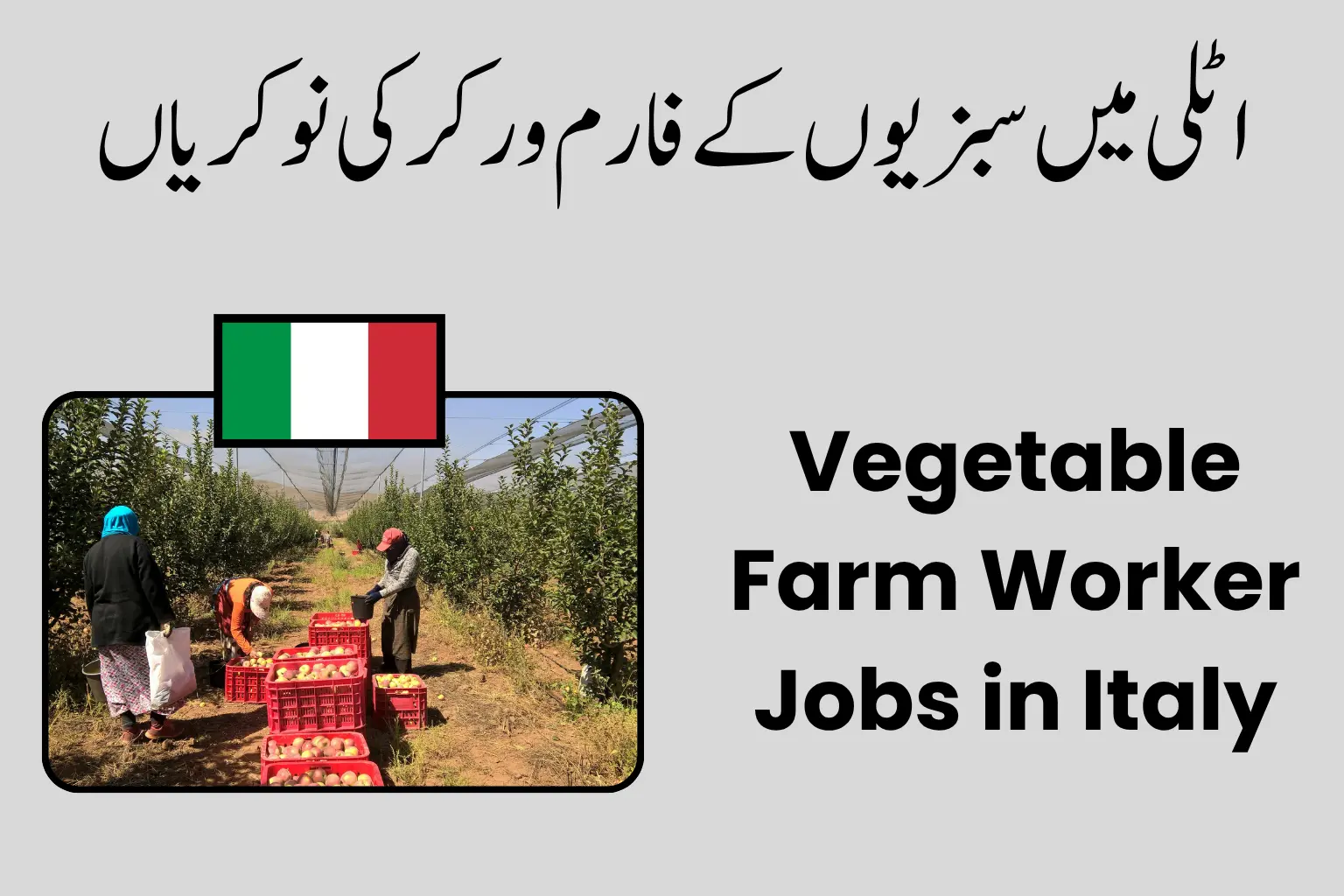
Italy’s agricultural industry is one of the largest in Europe, and vegetable farming plays a major role in supplying both domestic and international markets. In 2026, vegetable farm worker jobs in Italy are widely available for foreign workers due to ongoing labor shortages in harvesting, planting, and packaging.
This complete guide explains salaries, job roles, visa process, requirements, and how you can apply successfully.
Introduction to Vegetable Farm Worker Jobs in Italy
Vegetable farm workers are responsible for planting, maintaining, harvesting, and packing vegetables such as tomatoes, lettuce, cucumbers, peppers, and zucchini. These jobs are mostly seasonal but can also become long-term depending on the employer.
Italy’s fertile regions like Puglia, Sicily, Emilia-Romagna, and Lazio (Rome area) rely heavily on foreign workers to meet labor demands, especially during peak harvest seasons.
Why Vegetable Farm Jobs in Italy Are a Good Opportunity
Vegetable farming jobs are among the easiest entry-level jobs in Europe. Here’s why:
- High demand for foreign workers due to labor shortages
- No advanced education or degree required
- Visa sponsorship available through legal programs
- Opportunity to earn in Euros and save money
- Free or low-cost accommodation often provided
- Chance to gain international work experience
Italy hires thousands of workers every year because local labor is not enough to meet agricultural needs.
Types of Vegetable Farm Jobs
Common roles available in vegetable farms include:
1. Vegetable Harvester
- Picking vegetables like tomatoes, cucumbers, and peppers
- Sorting fresh produce
2. Farm Laborer
- Planting seeds and watering crops
- Cleaning fields and maintaining tools
3. Greenhouse Worker
- Working in controlled environments
- Monitoring plant growth and irrigation
4. Packing & Sorting Worker
- Packing vegetables for shipment
- Quality checking and labeling
5. Irrigation Assistant
- Managing water systems
- Ensuring proper crop hydration
These roles are mostly manual and require physical effort but are easy to learn.
Salary of Vegetable Farm Workers in Italy (2026)
Salaries vary depending on experience and job type.
| Job Role | Hourly Salary | Monthly Salary |
|---|---|---|
| Vegetable Picker | €10 – €13 | €1,600 – €2,100 |
| Farm Laborer | €10 – €12 | €1,600 – €1,900 |
| Greenhouse Worker | €11 – €14 | €1,700 – €2,200 |
| Packing Worker | €9 – €12 | €1,400 – €1,800 |
- Average wages range from €10 to €14 per hour
- Monthly earnings can reach €1,600–€2,200 depending on experience
Benefits Provided by Employers
Many employers offer additional benefits:
- Free or subsidized accommodation
- Transportation from housing to farm
- Medical insurance (in some cases)
- Overtime pay
- Legal employment contract
- Meals during working hours (in some farms)
Some farms and agricultural companies also provide visa sponsorship to attract foreign workers.
Work Visa for Vegetable Farm Jobs (Italy 2026)
Foreign workers must apply through Italy’s official immigration system called Decreto Flussi.
Key Visa Details
- Thousands of seasonal visas available each year
- Agriculture sector gets a large share of quotas
- Employer sponsorship is required
- Seasonal contracts usually last 3–9 months
Visa Process
- Get a job offer from an Italian employer
- Employer applies for work permit (Nulla Osta)
- Apply for visa at Italian Embassy
- Travel to Italy
- Apply for residence permit (Permesso di Soggiorno)
This is the only legal way to work in Italy as a non-EU worker.
Eligibility Criteria
To apply for vegetable farm jobs in Italy:
- Minimum age: 18 years
- Valid passport
- Physically fit for manual labor
- No criminal record
- Job offer from employer
- Basic communication skills (Italian or English preferred)
No high education or experience is required, making it ideal for beginners.
Required Documents
Prepare the following:
- Updated CV
- Passport copy
- Passport-size photos
- Medical certificate
- Police clearance certificate
- Job offer letter
- Work experience (if available)
How to Apply for Vegetable Farm Jobs in Italy
Follow this step-by-step process:
Step 1: Create a CV
Use a simple European-style CV focusing on physical work experience.
Step 2: Apply Online
Use trusted platforms:
Step 3: Apply to Employers
Send applications directly to farms and agriculture companies.
Step 4: Get Job Offer
Once selected, employer will start visa process.
Step 5: Apply for Visa
Submit documents and attend embassy interview.
Best Regions for Vegetable Farm Jobs
Top regions hiring vegetable workers include:
- Puglia (tomatoes and vegetables)
- Sicily (vegetables and fruits)
- Emilia-Romagna (greenhouse farming)
- Lazio (Rome area farms)
- Veneto (mixed agriculture)
Tips to Get Hired Quickly
- Apply early (January–March is peak hiring time)
- Keep documents ready
- Accept seasonal contracts
- Learn basic Italian
- Avoid fake agents or high fees
Frequently Asked Questions (FAQs)
1. Can foreigners apply for vegetable farm jobs in Italy?
Yes, foreigners can apply through employer-sponsored work visas.
2. Do I need experience?
No, most jobs are entry-level and require no experience.
3. What is the salary?
Workers earn around €1,600–€2,200 per month depending on role.
4. Is accommodation free?
Many employers provide free or low-cost housing.
5. How long is the contract?
Seasonal jobs usually last 3–9 months.
6. Is visa sponsorship available?
Yes, many employers provide visa sponsorship under legal programs.
Conclusion
Vegetable farm worker jobs in Italy in 2026 offer a strong opportunity for foreign workers looking for legal employment in Europe. With visa sponsorship, good salaries, and low entry requirements, these jobs are ideal for individuals seeking to start a career abroad.
If you are serious about working in Italy, prepare your documents, apply through trusted platforms, and act quickly before quotas are filled. Thousands of positions are available every year, but early applicants always have the best chance of success.


Driver
Need job